


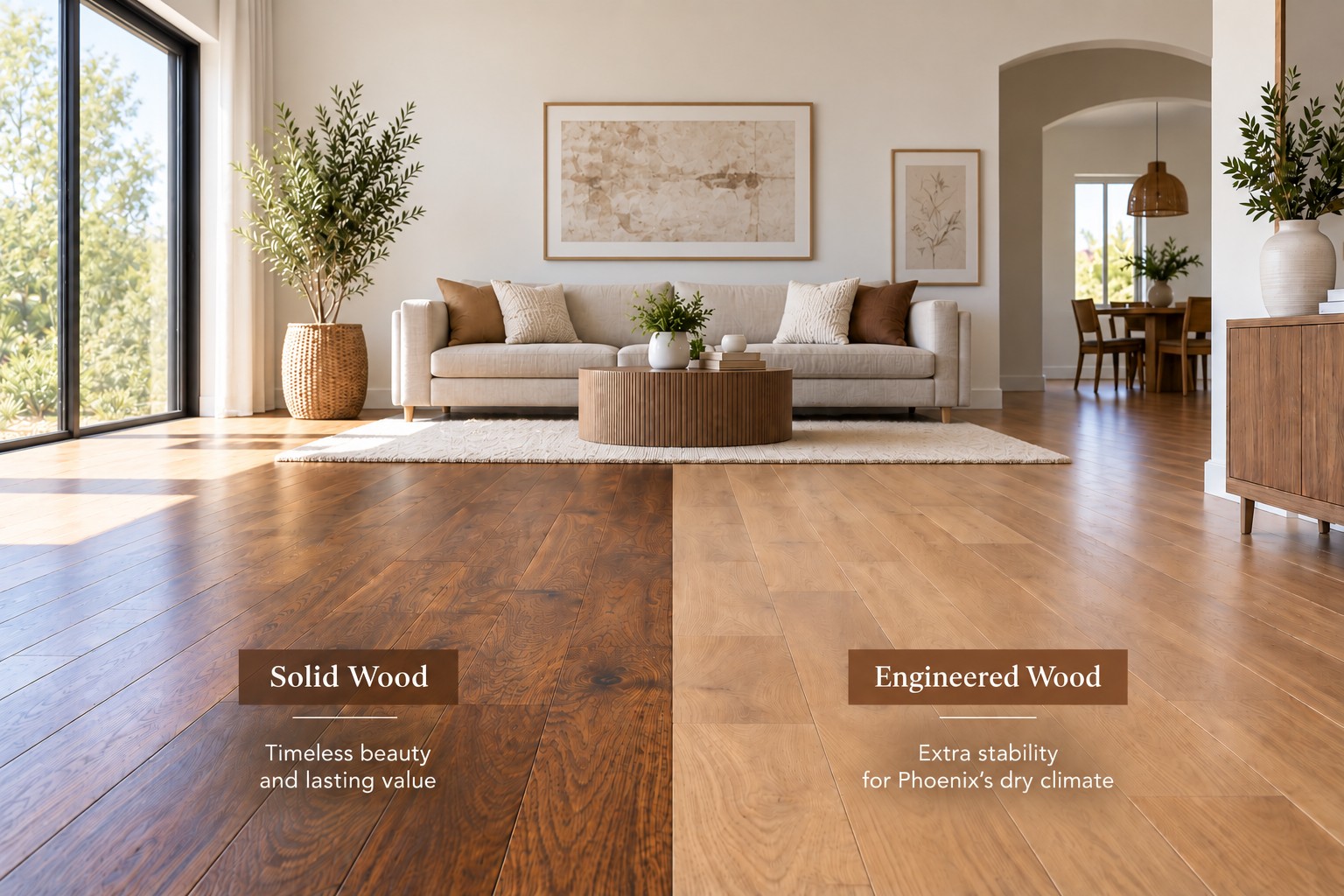
Natural wood brings warmth and organic character to any interior, but desert conditions introduce unique preservation challenges. Extreme thermal swings, intense sun exposure, and ultra-low humidity levels test the structural limits of traditional timber across the Valley. Homes in central Phoenix and suburban communities experience intense indoor and outdoor temperature fluctuations that test organic building materials. Choosing between solid planks and multi-layered alternatives determines how well your floors handle arid indoor climates over decades of daily use.
Solid Timber Behavior in Low Humidity
Solid timber consists of one single piece of milled lumber from top to bottom, making it susceptible to moisture and humidity fluctuations. Desert air pulls moisture directly out of organic fibers, causing wood planks to shrink, contract, and develop visible gaps during dry summer months. Continuous air conditioning runs throughout the long summer create artificial indoor weather that forces solid boards to shift constantly. This constant tension stresses the nail-down installation method commonly used on standard concrete subfloors.
Physical Limits of Single-Ply Boards
Natural timber boards lose moisture rapidly when indoor relative humidity drops below standard thresholds in local residences. Shrinkage stresses can cause unsightly gaps between planks or split the surface grain over time. Sanding and refinishing limits apply to solid wood, but excessive movement shortens overall longevity in arid regions.
Key structural performance factors for solid wood include:
Severe susceptibility to low relative humidity and seasonal indoor air conditioning cycles
Visible gap formation and edge cupping caused by rapid fiber contraction in dry air
Strict subfloor moisture and fastener requirements needed to mitigate board movement
Engineered Alternatives for Desert Homes
Engineered timber features a genuine hardwood veneer on top bonded to a multi-layered cross-grained plywood or high-density fiberboard core. This cross-layered construction prevents the wood from expanding or contracting excessively when indoor temperatures shift and humidity vanishes. Valley houses benefit immensely from this dimensional stability because the internal core counteracts the natural pull of the top veneer.
Multi-Layer Stability Benefits
Cross-grained layers neutralize the natural movement caused by dry desert air conditioning. Direct glue-down installation methods secure the floor firmly against arid concrete subfloors, preventing hollow spots and shifting. Top wear layers deliver the exact same authentic grain beauty and texture as traditional solid planks while standing up to active family routines.
Core structural benefits of multi-layered boards include:
Superior resistance to extreme thermal swings and indoor humidity drops
Cross-directional core plys that lock individual planks flat against concrete slabs
Authentic hardwood surface veneers that provide identical visual appeal to traditional lumber
Subfloor Preparation and Concrete Slab Realities
Southwest construction relies heavily on concrete slabs that hold residual moisture and react aggressively to temperature swings during seasonal changes. Proper moisture testing and professional subfloor leveling prevent buckling or hollow spots beneath your new wood surfaces. Evaluating slab conditions before installation ensures that your chosen flooring material stays flat and stable regardless of intense outdoor heat.
Achieving Permanent Structural Support
Arid concrete slabs require thorough moisture barrier testing prior to any wood installation. Uneven subfloor spots need professional grinding or leveling compounds to support rigid plank contact across every square foot. Quality adhesives maintain a secure bond against desert concrete foundations throughout seasonal temperature shifts.
Essential subfloor preparation steps involve:
Rigorous moisture emission testing on concrete slab foundations
Precision grinding to eliminate surface ridges and low spots
Application of specialized primers and vapor retarders designed for desert foundations
Sun Exposure and Window Fading Factors
Floor-to-ceiling windows bring gorgeous natural light into modern living spaces, but intense ultraviolet rays accelerate wood discoloration and finish degradation. Direct sunlight streaming across central corridor ranches or luxury desert contemporary estates can bleach natural wood stains unevenly. Selecting UV-cured factory finishes protects the surface grain from harsh solar exposure and preserves your chosen stain color for years.
Mitigating Solar Thermal Stress
Intense sunlight penetrates large glass sliding doors and fades unprotected timber finishes rapidly. Factory-applied UV-cured coats shield the wood surface against harsh solar thermal stress. Window treatments help regulate indoor thermal swings and protect your investment from premature sun damage.
Important protection methods against solar degradation include:
Specifying factory-cured protective topcoats that block intense ultraviolet rays
Incorporating window films and architectural shading to reduce direct solar heating
Selecting lighter wood stains that mask natural bleaching effects from direct sunlight
Design Adaptation Across Regional Architecture
Matching your wood selection to local architectural styles elevates the entire aesthetic of your home while maintaining practical durability. Mid-century modern ranches in central neighborhoods pair beautifully with lighter European oak tones that reflect natural light. Upscale desert contemporary properties in Scottsdale and Mesa benefit from wide-plank character grades that complement sleek, minimalist interior designs. Growing suburban developments across Goodyear, Glendale, and Surprise thrive on durable matte finishes that mask everyday family footprints and active pet routines.
Aesthetic Styling for Local Homes
Lighter oak stains brighten dark interior spaces and mask fine tracked-in desert dust effectively. Wide planks create expansive sightlines in modern open-concept floor plans common in newer suburbs. Matte finishes conceal minor surface scratches better than high-gloss sealants in active households.
Regional aesthetic considerations include:
European oak tones that complement mid-century architecture in central Phoenix neighborhoods
Wide character planks that match luxury transitional estates across Scottsdale and Mesa
Durable matte finishes that handle family activity in West Valley suburban developments
About Arizona Floors LLC
Arizona Floors LLC is an established, independent, family-owned flooring and home remodeling retailer serving the Phoenix, AZ area with showrooms in Phoenix and Surprise. Established in 2004 by Robert Borgerson, we deliver personalized accountability, true wholesale pricing, and professional installation across residential homes, kitchens, bathrooms, and living spaces.
Visit Our Showrooms and Schedule Measurements
Upgrading your home with fine timber surfaces begins with seeing physical samples in person and verifying room dimensions accurately. Visit our showrooms to browse extensive wholesale-priced catalogs in Phoenix and Surprise, backed by precise free in-home measurements to ensure flawless project planning. Explore our comprehensive selection of hardwood flooring to learn more about material grades and finish options. Coordinate your new floors alongside custom kitchen cabinets and beautiful countertops for a complete home transformation. Call our team today to discuss your next project across the Valley.
